
Water Damage vs Flood Damage: What’s Different?
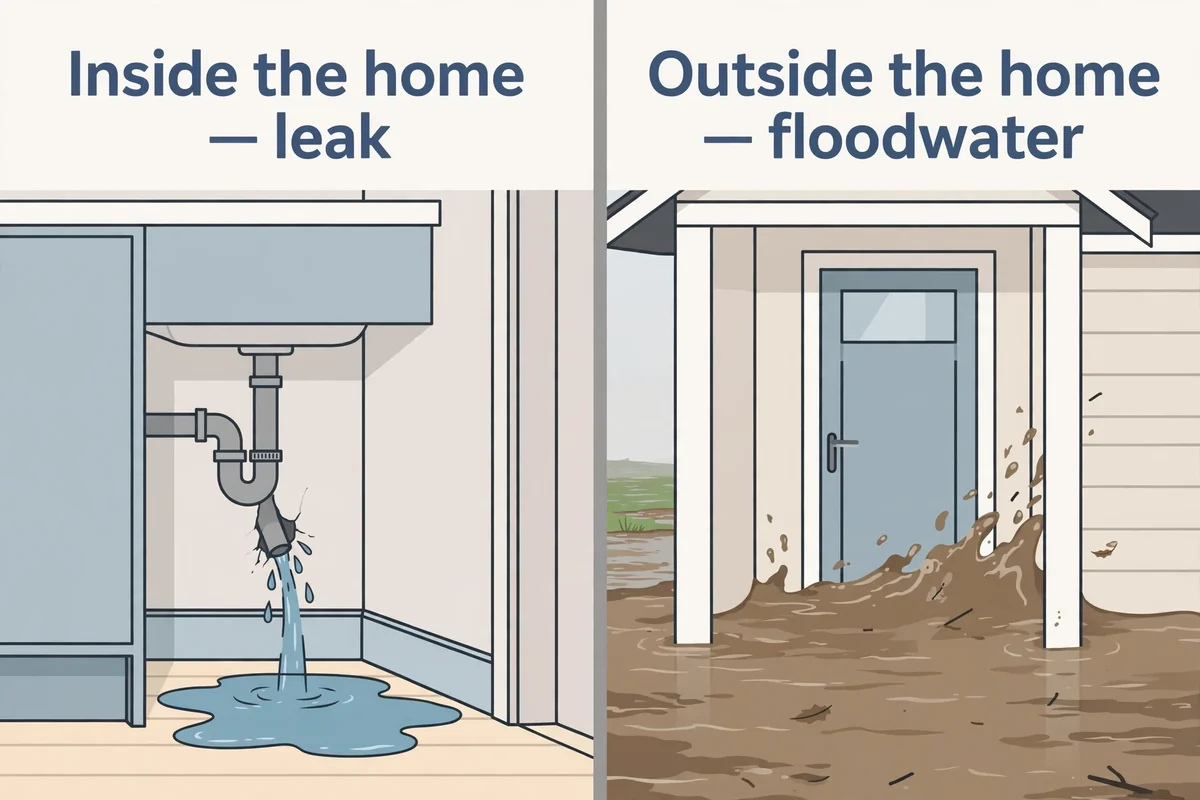
Water damage vs flood damage comes down to where the water came from. Water damage usually means a sudden indoor leak, like a burst pipe or a hot water tank failure. Flood damage usually means water from outside or rising water, and the two are often treated differently by insurance.
24/7 — call any time • Serving 27 Wichita ZIP codes • Local Wichita water damage team
What counts as water damage in a Wichita home?
Water damage usually means water from inside the home that escapes where it should not be. A burst supply pipe, a failed hot water tank, a washing machine hose that splits, or a dishwasher leak all fit this pattern. The water starts inside, spreads through rooms, and soaks floors, sheet rock, and belongings before anyone notices or stops it. The key feature is the source, not the size of the puddle. A small indoor leak that runs for hours into a wall cavity can cause more hidden harm than a larger spill you mop up at once. That is why our team asks where the water came from, when it started, and which rooms it reached, before we talk about drying or repairs. In Wichita, indoor leaks happen in every season, and they have nothing to do with a river or a storm drain. A pipe that bursts in a cold snap, a tank that fails in a utility room, and a slow supply leak under a sink are all indoor water damage, even when they happen on a dry, sunny day.
What counts as flood damage?
Flood damage usually means water from outside that enters the home, or water that rises and spreads over land that is normally dry. Street flooding after heavy rain, a swollen river, storm water backing up through a drain from outside, and water that rises across a yard and into a basement all fit this pattern. Wichita has clear recent examples. In June 2026, KSN TV reported up to 6 inches of rain overnight across the Wichita area, with a flash flood emergency, submerged cars, and 911 taking more than 100 flooded-vehicle calls. The National Weather Service Wichita office recorded that event on 25 to 26 June 2026, and an earlier event on 3 June 2025. Flood water is also treated as Category 3 black water, because it can carry sewage, chemicals, and debris even when it looks clear. That means flood cleanup is a professional job with stronger cleaning steps, and it should never be treated as a simple mop-up. Stay out of flood water, document from a safe spot, and get an assessment from our team before you start removing items.
How does insurance generally treat the two?
In general terms, a standard homeowners policy generally covers sudden and accidental indoor water damage, such as a burst pipe, while it generally excludes flood damage from outside or rising water. Flood cover is generally separate, often through the National Flood Insurance Program, known as NFIP, or a separate flood policy. Those are general patterns only, and your own policy wording decides what is covered in your case. That wording point matters more than any general guide can cover. Policies differ on sewers, drains, slow leaks, and damage that built up over time, and a claim can turn on a single clause or exclusion. This page never states a coverage outcome for a specific claim, and no guide can replace reading your policy or asking your insurer or agent about your exact situation. When you talk to your insurer or agent, ask general questions rather than assuming an answer. Ask which policy covers water from inside versus water from outside, whether sewer or drain backup needs separate cover, what your policy says about leaks that ran for a long time before discovery, and what records they want from you. Write down the name of the person you spoke with, the date, and what they said, and keep that note with your photos. If you have flood cover through NFIP or another flood policy, ask how that policy treats the same event, and keep the two conversations separate in your notes so the sources do not get mixed up. None of those questions decides your claim, and the answers depend on the wording you signed, but asking them early stops a common problem: a homeowner who cleans up fast, throws items away, and only later learns what record the insurer needed. A short call and a dated note cost little, and they keep the source story clear. The Kansas Insurance Department runs a storm-and-flood consumer page that explains storm and flood topics for Kansas homeowners. Read it alongside your policy, keep photos with dates, and write down the source of the water and when you found it. A clear record of where the water came from is the single most useful thing you can give an insurer, because the source is what often separates an indoor leak from a flood in a claim discussion.
Why does the source matter more than the wet room?
Two homes can have a wet basement for two very different reasons, and the source changes the cleanup, the safety steps, and the insurance conversation. A basement wet from a burst pipe inside is indoor water damage, while a basement wet from rising water outside is flood damage, even if the rooms look the same in photos. The water in the second case is black water, while the first case may start as clean water. The Sedgwick County flood factsheet and the Arkansas River flood history show why Wichita homeowners should know this split. The Arkansas River and the MS Mitch Mitchell Floodway, known as the Big Ditch, shape how water moves around the city, and homes near low ground or a flood path face outside-water risk that indoor plumbing alone does not explain. When you call for help, lead with the source: where the water came from, whether it rose from outside or leaked from inside, and when you first saw it. That first sentence helps our team plan the right cleanup and helps you describe the event clearly to your insurer.
What should I do first for each type?
For an indoor leak, shut the water off at a safe valve if you can reach it without wading, and do not touch outlets or appliances in standing water. Move dry items out of the way, take photos with dates, and note the time you found the leak and what you did next. Then get a moisture check, because water in sheet rock or under flooring can stay wet after the surface looks dry. For flood water, stay out of it and do not try to mop or vacuum it yourself. Take photos from a safe, dry spot, note the high-water mark if you can see it safely, and keep children and pets away. Flood water can hide drains, debris, and electrical hazards, and a professional cleanup is needed before repairs start. In both cases, do not start painting, flooring, or sheet rock repairs until our team confirms the area is dry. Mold can start within 24 to 48 hours on wet materials, according to CDC and EPA guidance, so a prompt check matters for both indoor leaks and flood water. A calm, dated record and an assessment protect you better than a fast repair over wet material.
How do I get help in Wichita for either type?
ICT Water Pros serves the Wichita metro from the Downtown Wichita Area in Wichita, KS 67202, across the 27 ZIP codes on the home page. Call (316) 205-2900 and our team will take it from there. Our team does the restoration work; we do not decide insurance outcomes — your policy wording and your insurer decide that. When you call, say plainly whether the water came from inside or outside, and whether it is still coming in. That one detail shapes the cleanup plan and the questions our team will ask next. If water is still rising or the street is flooded, follow local safety advice first and do not drive through flood water to reach a property or a meeting point. Cost questions are fair, but national figures are not Wichita prices. Bob Vila reported in May 2023 an average job of about $3,455 nationally, and PushLeads in 2026 put a national figure near $3,867. No Wichita prices have been published that could be found, so get a quote for your home and ask your insurer about your policy wording before you assume any cost is covered.
Water damage vs flood damage at a glance
| Feature | Water damage (indoor) | Flood damage (outside/rising) | Why it matters |
|---|---|---|---|
| Typical source | Burst pipe, hot water tank, appliance hose | Heavy rain, river, rising street water | Source drives cleanup and insurance talk |
| Water category | Often Category 1 or 2 at first | Category 3 black water | Flood water needs stronger cleaning |
| General insurance pattern | Generally covered if sudden and accidental | Generally excluded, NFIP is separate | Policy wording decides each claim |
| First safety step | Shut water off safely if you can | Stay out of flood water | Avoids contact and electrical risk |
| DIY or pro? | Our team if it reached walls or flooring | Our team, never DIY | Hidden spread and black water risk |
| Key record to keep | Leak source, time found, photos | High-water mark, photos, dates | Source is what separates the two |
Frequently Asked Questions
Is a roof leak water damage or flood damage?
A roof leak is usually treated as water damage, not flood damage, because the water comes through the home rather than rising from outside. Your policy wording still decides, so check how your policy treats roof and storm leaks.
Is a sewer backup flood damage?
Not exactly, but it is close in handling. A sewer backup is Category 3 black water and needs a professional cleanup like flood water, and many policies treat sewer and drain backup as a separate item, so check your policy wording.
Does flood insurance cover an indoor burst pipe?
Generally, no, flood insurance is for flood water from outside, while a burst pipe is an indoor water damage claim. The two covers serve different sources, so the source of your water decides which policy to ask about first.
Can one storm cause both types in one home?
Yes, it can. A storm can bring outside flood water into a basement and, at the same time, a roof or pipe failure can leak inside. Note each source separately with photos and times, because they may be treated as separate events.
Will my insurer accept photos I take myself?
Photos with dates help in most claim discussions, but they do not decide coverage on their own. Keep the originals, note the source and time, and send what your insurer or agent asks for rather than deleting anything.
Sources
- Kansas Insurance Department — storm and flood. https://www.insurance.kansas.gov/consumers/storm-and-flood — Kansas consumer page on storm and flood topics.
- NWS Wichita — 25-26 June 2026 event. https://www.weather.gov/ict/event_20260625 — Dated Wichita flood event.
- NWS Wichita — 3 June 2025 event. https://www.weather.gov/index.php/ict/event_20250603 — Earlier dated Wichita event.
- KSN TV — June 2026 Wichita flash flooding. https://www.ksn.com/weather/weather-stories/heavy-rain-leads-to-flash-flood-emergency-in-wichita-several-cars-submerged/ — Source for up to 6 inches of rain overnight and 100+ flooded-vehicle calls.
- Sedgwick County flood factsheet. https://www.sedgwickcounty.org/media/29164/water-and-stormwater-factsheet.pdf — County water and stormwater facts.
- USGS Arkansas River historic floods. https://www.usgs.gov/centers/central-plains-water-science-center/historic-floods-along-arkansas-river — Historic flood context for the Arkansas River.
- CDC homeowners and renters mold guide. https://www.cdc.gov/mold-health/media/Homeowners_and_Renters_Guide.pdf — Mold can start within 24-48 hours on wet materials.
- Bob Vila water damage cost, May 2023. https://www.bobvila.com/articles/water-damage-restoration-cost/ — NATIONAL benchmark only, about $3,455 average job; not a Wichita price.
Last reviewed: 2026-10-26
Service area: ICT Water Pros serves the Wichita metro across 27 ZIP codes: 67202–67220, 67223, 67226, 67227, 67228, 67230, 67232, 67235, 67260. Location line: Downtown Wichita Area · Wichita, KS 67202. No street address is claimed.
Related pages: ICT Water Pros home page • how it works • water damage cost in Wichita • water damage insurance guide for Kansas • flood cleanup • Wichita flood-prone areas • water categories and classes explained • first 60 minutes after water damage
ICT Water Pros — Wichita, KS — Call (316) 205-2900 — Open 24/7