
Mold After Water Damage in Wichita, KS
Mold needs moisture. Wet materials should be dried within 24 to 48 hours; if they are not dried in that time, assume mold growth (S9). The real risk is hidden moisture: a wall can feel dry on the surface while the sheet rock paper and the insulation behind it stay wet. If your question is only about mold — no standing water, no wet material — ICT Water Pros does not offer mold-only services: use the official guidance linked below and talk to your insurer about next steps. If there is still standing water or wet material, that is active water damage: Call (316) 205-2900.
24/7 — call any time • Serving 27 Wichita ZIP codes • Local Wichita water damage team
Who This Page Is For
This page is for anyone in the Wichita area who is worried about mold after water got into a home. If your question is only about mold, with no active water, we have no mold service to offer; use this page to understand the issue. If there is still water or wet material in the house, that is a water damage problem, and the number above is for active water damage in one of the Wichita ZIP codes listed near the bottom.
Who We Are
ICT Water Pros is a Wichita water damage restoration company. Our team responds, inspects and does the work. When you call the number on this page, you reach our own team. Read How It Works.
How Fast Can Mold Start?
Wet materials should be dried within 24 to 48 hours; if they are not dried in that time, assume mold growth (S9). Visible growth may take longer to appear, and mold can be hidden behind walls and under flooring. Drying wet materials within that window is the main prevention step. The fastest way to lower the risk is to remove the water and dry the structure inside that window. See the first 60 minutes checklist.
What Is Real and What Is Not
- Real: hidden moisture. Wet sheet rock paper, insulation and the space under flooring can stay wet after the surface looks dry (S9).
- Real: timing. Wet materials should be dried within 24 to 48 hours; if they are not dried in that time, assume mold growth (S9).
- Confusing: testing versus removal. A test tells you whether spores are present. It does not remove anything. Drying the structure and removing wet or moldy materials is what fixes the cause.
- Not a fix: wiping or spraying a surface when water is inside the wall or under the floor.
- Size: the EPA says a moldy area under about 10 square feet (about 3 ft x 3 ft) can usually be handled by the homeowner. For more than that, or a lot of water damage, it points to its remediation guidance (S9).
Belongings and Mold
Porous belongings that stayed wet are the usual place mold shows up: upholstery, mattresses, books, cardboard and particleboard furniture. Hard items, like glass and metal, can usually be cleaned. Photograph and list items before you throw anything out, because your insurer may ask.
Mold and Insurance in Kansas
Whether a policy covers mold, and how much, varies by policy and by cause. A standard homeowners policy generally covers sudden and accidental water damage and commonly excludes gradual leaks and flood (S7). Read your policy, and ask your insurer directly. Full guide: water damage insurance in Kansas.
What To Do If You Think You Have Mold
General guidance, not a medical or legal instruction.
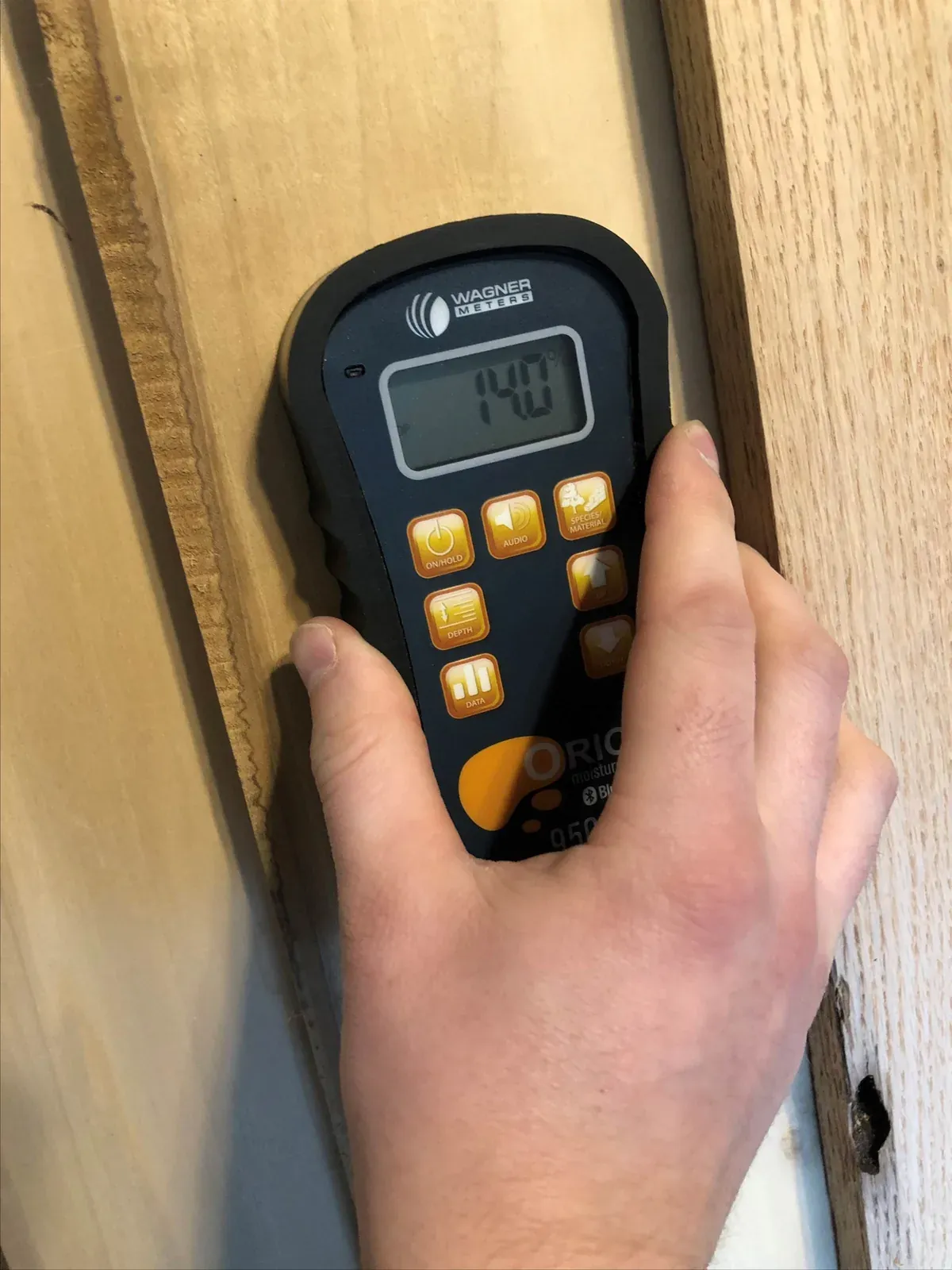
- Find out if there is still moisture. A moisture meter finds wet material. If something is still wet, it is a water damage problem first.
- Photograph what you see, with the date.
- If water is still present, call our team for water damage help, and call your insurer.
- If it is only mold, use official guidance (S9) to decide how to proceed. See the EPA mold cleanup guide and the CDC homeowners and renters mold guide.
- Ask about licensing. Kansas rules on mold-work licensing were not confirmed in the research — ask any mold company what license or certification its mold work carries and verify it.
- Do not rely on a surface cleaner alone if the cause is moisture inside a wall or floor.
What Can Be Saved and What Has to Go
Materials that are dried fast enough are often saved. Wet carpet and pad, wet insulation, and sheet rock that stayed wet are commonly removed. Hard, non-porous items are cleaned. The decision depends on a moisture reading, not on appearance. Mold on a material is a reason to remove it rather than dry it.
What Good Follow-Up Looks Like
After a water loss, ask for the daily moisture readings and the final readings in writing before any wall is closed up. Dry readings are the evidence that the conditions mold needs are gone. If you can smell must or see staining later, tell our team and your insurer, with dates and photos.
What You See, What It May Mean, What To Do
| What you see | What it may mean | General next step |
|---|---|---|
| Water still on the floor or wet materials | An active water problem; dry wet materials within 24 to 48 hours or assume mold growth (S9) | Call our team for water damage help; photograph first |
| Wet less than 48 hours ago and now dry | Lower risk, but hidden moisture is possible (S9) | Check with a moisture meter before closing walls |
| Wet more than 48 hours | Higher risk of mold on wet materials (S9) | Our team’s assessment of the wet area |
| A musty smell, no visible growth | Possible hidden moisture | Look for the moisture source and check with a meter |
| Visible mold on a small spot | About 10 square feet or less (about 3 ft x 3 ft) — EPA guidance (S9) treats smaller areas as usually manageable and larger ones as needing professional guidance | Follow official guidance |
| Visible mold over a large area | More than about 10 square feet (about 3 ft x 3 ft) (S9) | A licensed mold professional (mold-only work is not our service) |
What Mold Work Costs
We have not found published Wichita prices for mold work, and no national mold cost figure is in our sources, so this page quotes none. ICT Water Pros does not offer or price mold services.
Wichita Facts: Why the Timing Matters Here
- 25 to 26 June 2026: the National Weather Service recorded a daily rainfall record of 5.31 inches at Wichita Eisenhower airport, with 4 to 7 inches in two to three hours across parts of the metro. Basement apartments in west Wichita were evacuated (S1).
- 3 June 2025: flash flooding hit east Wichita, and a motel reported a basement full of water (S2).
Basements that take on water are the places where the 24 to 48 hour window matters most.
Wichita ZIP Codes Covered (Active Water Damage Only)
67202, 67203, 67204, 67205, 67206, 67207, 67208, 67209, 67210, 67211, 67212, 67213, 67214, 67215, 67216, 67217, 67218, 67219, 67220, 67223, 67226, 67227, 67228, 67230, 67232, 67235, 67260
This list is for active water damage, not for mold-only questions. Coverage outside these ZIP codes is not confirmed.
How a Call Works
Call (316) 205-2900 and tell our team your name, ZIP code and problem type. You talk to our own team about what happened and decide whether to hire us. Calling is free; you only pay for work you agree to. After hours, call and leave a message and our team will call you back — no instant-dispatch promise is made.
How This Page Was Made
Statistics on this page are tied to the sources listed at the bottom. The page shows a last reviewed date. Method details are on Sources and Methodology. This site does not publish customer reviews or job counts it cannot verify. Editor: the ICT Water Pros editors.
Quick answers about mold after water damage
How long does it take for mold to grow after water damage?
Wet materials should be dried within 24 to 48 hours; if they are not dried in that time, assume mold growth, according to CDC and EPA guidance (S9). Visible growth may take longer to appear, and drying within that window is the main prevention step.
Can I get a mold test after a water leak?
A mold test tells you whether spores are present, but it does not remove anything. Drying the structure and removing wet or moldy material is what fixes the cause. ICT Water Pros does not offer mold testing. If water is still present, treat it as a water damage problem first.
Is it mold or just a stain from water damage?
We cannot tell from a description. Staining can come from water without mold, and mold can hide behind a clean-looking surface. Look for the moisture source and check wet areas with a moisture meter. For visible growth, follow official guidance — see the EPA mold cleanup guide and the CDC homeowners and renters mold guide.
When should I call a professional about mold?
When water is still present, when materials stayed wet more than 24 to 48 hours (S9), or when visible mold covers more than about 10 square feet (about 3 ft x 3 ft). For mold-only work, ask your insurer and a licensed mold professional; for active water damage, call our team.
Does homeowners insurance cover mold in Kansas?
It depends on the policy and the cause. A standard homeowners policy generally covers sudden and accidental water damage and commonly excludes gradual leaks and flood (S7). Mold limits vary by policy, so check the wording about mold and ask your insurer what it requires.
Does drying a wet wall stop mold?
Drying the structure within 24 to 48 hours is the main way to prevent mold from starting on wet materials (S9). A wall can feel dry while the insulation behind it is wet, so a moisture meter reading matters more than touch.
Sources
- S1: National Weather Service Wichita, 25 to 26 June 2026 event page. https://www.weather.gov/ict/event_20260625
- S2: National Weather Service Wichita, 3 June 2025 event page. https://www.weather.gov/index.php/ict/event_20250603
- S7: Kansas Insurance Department, storm and flood consumer page. https://www.insurance.kansas.gov/consumers/storm-and-flood
- S9: CDC and EPA mold guidance (timing and cleanup thresholds). https://www.epa.gov/mold/brief-guide-mold-moisture-and-your-home and https://www.cdc.gov/mold-health/media/Homeowners_and_Renters_Guide.pdf
- S10: ANSI/IICRC S500 (categories, classes, drying). https://iicrc.org/s500/ Note: the official text for this standard has not been obtained; the statements here rest on the secondary sources listed.
Last reviewed: 2026-10-25
ICT Water Pros — Wichita, KS — Call (316) 205-2900 — Open 24/7