
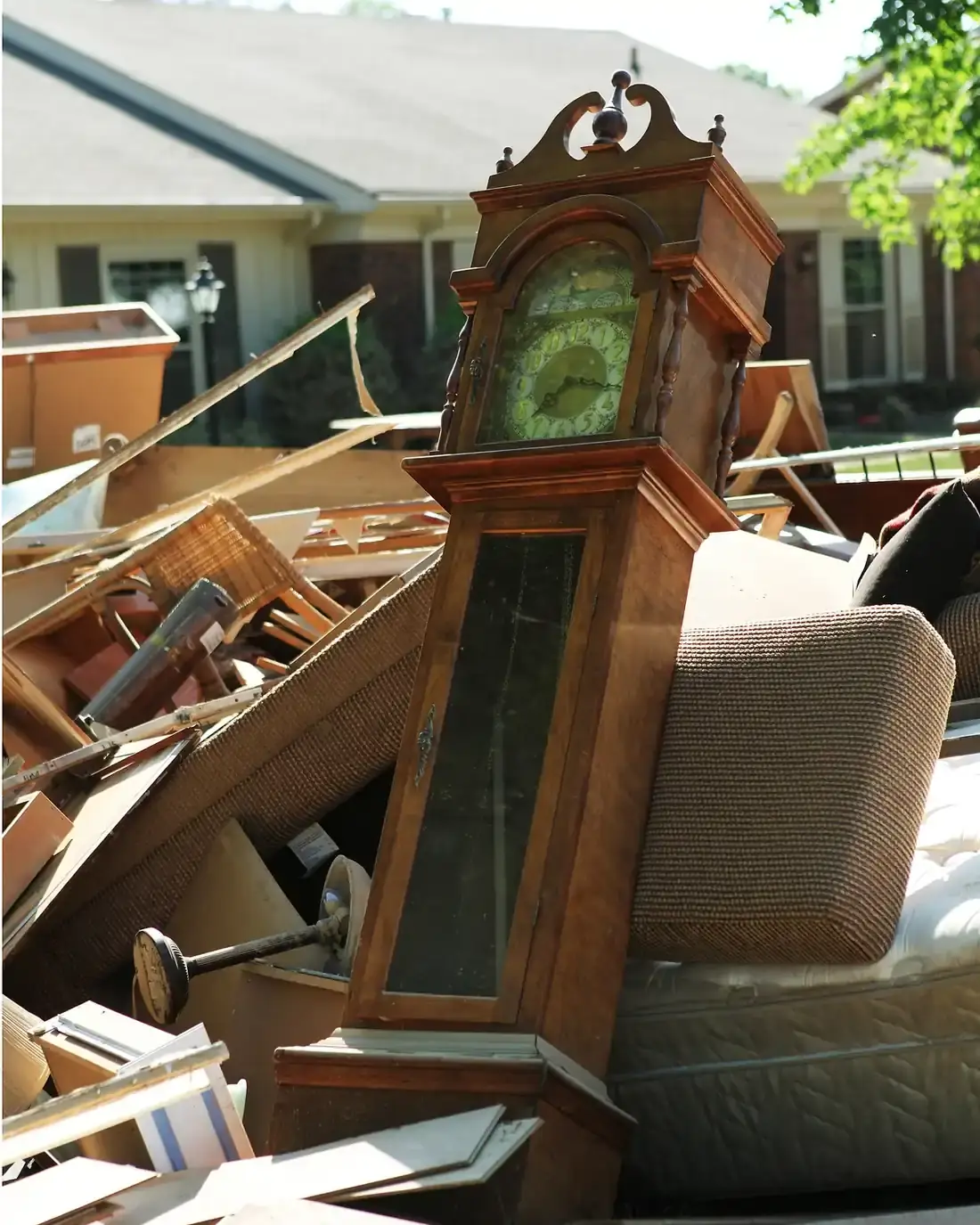
Belongings & Contents After Water Damage
With water damaged belongings, sort items before you throw anything out: hard, non-porous items often clean up well, while fabric and particleboard soak water in and are harder to save. Photograph and list each item first, keep receipts, and follow the gray and black water rule below. No item can be promised as saved until checked.
24/7 — call any time • Serving 27 Wichita ZIP codes • Local Wichita water damage team
What should you do first with wet belongings?
Move dry items away from wet ones, if it is safe to do so, and start photos right away. Take a wide photo of each room, then a close photo of each item, with the room name noted. A list with the item, the room, and the date you found it wet helps later, when memory of a rushed day has faded. Do not throw items out in the first rush unless they are a safety risk, such as food soaked in dirty water. Once an item is gone, a photo and a list are all that remain for a claim or a talk with our team. Bag wet fabric apart from dry fabric, so damp does not spread to items that stayed dry.
Which items clean up best after clean water?
Hard, non-porous items, such as metal, glass, and sealed plastic, often clean up well after clean water, once they are washed and dried. Solid wood can sometimes be saved too, but it needs time to dry slowly, and it may warp if dried too fast. Each item still needs a check on its own, since a joint, a finish, or a hidden hollow can hold water. Electronics need care even when they look fine outside. Do not plug in a wet device to test it, and ask our team or a repair shop what to do with it. Batteries, chargers, and small motors can hide water inside, so a dry outside does not prove the inside is dry.
Why are fabric and particleboard items harder to save?
Fabric soaks water deep into fibres, and it can hold smell and mold growth even after the surface feels dry. Rugs, curtains, cushions, and clothes need washing and full drying, and some may not come back to a usable state. Particleboard and similar pressed boards swell as they soak, and that swelling often does not reverse once the board has dried. Sheet rock, which many Wichita homes use for walls, also soaks and weakens when wet, and wet lower sections are often taken out rather than dried in place. Keep a photo of each such item before it is removed, and note the room and the wall it came from. That record matters for a claim, even when the item itself cannot be kept.
What is the gray and black water rule for belongings?
Porous materials soaked in sewage or flood water are removed, not dried. That rule covers fabric, cushions, rugs, particleboard, and other items that soak water in, when the water is gray or black water. Hard, non-porous items may be cleaned under our team’s direction, but porous items from dirty water should not be kept for use in the home. Do not sort dirty-water items with bare hands, and keep children and pets away from them. Bag them for removal, note each item on your list with a photo first, and ask our team how removal will be handled. When in doubt about the water type, treat the item as if the water was dirty, and ask before you try to save it.
How do photos, lists, and receipts help later?
Photos and lists turn a pile of wet items into a record a claim adjuster or our team can follow. For each item, note what it is, where it was, when it got wet, and whether you kept it, cleaned it, or threw it out. Receipts for cleaning, storage, or replacement items show what you spent and when, and they belong in the same folder as the photos. Keep that folder in one place, on paper or on a phone, and make a copy if you can. If a question comes up weeks later about one item, a dated photo and a list line will answer it faster than memory. For help with the contents side, call our team at ICT Water Pros at (316) 205-2900.
What did Wichita storms teach about contents losses?
Wichita storms can flood rooms fast and leave contents soaked before a homeowner can move them. In June 2026, KSN TV reported up to 6 inches of rain overnight across the Wichita area, with 911 taking more than 100 flooded-vehicle calls, and Wichita Fire ran 180 calls in 10 hours, with 60% water-related. The National Weather Service in Wichita also recorded a storm event on 25-26 June 2026, and an earlier event on 3 June 2025. Mold can start within 24-48 hours on wet materials, according to CDC and EPA guidance, so sorting and drying contents is not a job to leave for a later week. Start with photos and a list, move what can be moved to dry air, and ask our team which items need removal rather than drying. Sedgwick County’s flood factsheet also gives background on water and stormwater in the county, including the Arkansas River and the floodway known as the Big Ditch.
How should you store items while drying goes on?
With water damaged belongings, storage during drying needs dry air, space between items, and a clear label on each box or bag. Do not stack wet fabric in a closed pile, since trapped damp feeds smell and mold growth, and do not put damp items back into a closed closet before they are fully dry. Spread items out where air can move around them, and check them each day for smell or new damp spots. Keep items from different rooms apart where you can, and keep the list with the boxes, not in a separate place you might lose. A box marked with the room and the date it was packed can be matched to your photo list later, without opening every box to find one item. For items you plan to claim, keep the photo, the list line, and any receipt together in one folder. If storage space is tight, ask our team which items need air flow most urgently and which can wait, rather than packing everything tight to save space. Items that are still damp should stay where air moves, even if that means a room stays in use as a drying space for a few days longer. Rushing items back into place can undo drying work that took days to achieve.
Belongings after water: what tends to happen by material
| Item type | After clean water | After gray or black water |
|---|---|---|
| Metal, glass, sealed plastic | Often washes and dries well, with a check for hidden joints | Clean only under our team’s direction; check each item |
| Solid wood furniture | May be saved with slow drying, but may warp | Ask our team; porous joints and finishes need a check |
| Fabric, rugs, cushions | Wash and dry fully; some may not come back to use | Porous items are removed, not dried |
| Particleboard furniture | Swells as it soaks; swelling often does not reverse | Porous items are removed, not dried |
| Paper, books, photos | Dry flat with air flow; some pages may stick or warp | Porous items are removed, not dried |
Frequently asked questions
Should I throw wet items out right away?
Photograph and list each item first, unless it is a safety risk such as food soaked in dirty water. Once an item is gone, the photo and list are the only record left for a claim.
Can a wet rug always be saved?
No, a wet rug cannot always be saved, even after clean water, since fibres can hold smell and mold growth. After gray or black water, porous rugs are removed, not dried.
What about a wet mattress?
A wet mattress is hard to dry through, and after dirty water it should be removed, not kept for sleeping. After clean water, ask our team to check it before you decide.
Do I need receipts for thrown-out items?
Receipts help, but a dated photo and a list line for each item also help when no receipt exists. Note the item, the room, and the date, and keep the list with your claim papers.
Who can help sort contents in Wichita?
Our own team at ICT Water Pros helps sort and check contents. Call (316) 205-2900 — you only pay for work you agree to.
Sources
- EPA — brief guide to mold, moisture, and your home. https://www.epa.gov/mold/brief-guide-mold-moisture-and-your-home — Mold can start within 24-48 hours on wet materials.
- CDC — homeowners and renters guide to mold. https://www.cdc.gov/mold-health/media/Homeowners_and_Renters_Guide.pdf — Guidance on mold after water damage.
- National Weather Service Wichita — 25-26 June 2026 event. https://www.weather.gov/ict/event_20260625 — Dated Wichita storm event.
- National Weather Service Wichita — 3 June 2025 event. https://www.weather.gov/index.php/ict/event_20250603 — Earlier dated Wichita storm event.
- KSN TV — heavy rain and flash flood emergency in Wichita. https://www.ksn.com/weather/weather-stories/heavy-rain-leads-to-flash-flood-emergency-in-wichita-several-cars-submerged/ — June 2026 report of up to 6 inches of rain overnight and 100+ flooded-vehicle calls.
- Sedgwick County — water and stormwater factsheet. https://www.sedgwickcounty.org/media/29164/water-and-stormwater-factsheet.pdf — County background on water, stormwater, the Arkansas River, and the floodway.
Service area: ICT Water Pros serves the Wichita metro across 27 ZIP codes: 67202–67220, 67223, 67226, 67227, 67228, 67230, 67232, 67235, 67260. Location line: Downtown Wichita Area · Wichita, KS 67202. No street address is claimed.
Related pages: Home · How It Works · Water Damage Cost in Wichita · Mold After Water Damage · First 60 Minutes After Water Damage
Last reviewed: 2026-10-26
ICT Water Pros — Wichita, KS — Call (316) 205-2900 — Open 24/7