
Water Damage Restoration Process in Wichita, KS
Water in your home is stressful enough. Here is exactly how our team takes a wet Wichita home from soaked to dry — step by step, with nothing hidden.
24/7 — call any time • Serving 27 Wichita ZIP codes • Local Wichita water damage team
What is the water damage restoration process?
- It is the full path from the first call to a dry, repaired home: assess the damage, extract the water, protect or remove wet contents, dry the structure, monitor moisture daily, clean and sanitize, then repair what the water hurt.
- Most Wichita homes need the same 8 steps, in the same order — skipping steps is what causes mold, warped floors and second repairs later.
- Our team does every step ourselves, and we explain each one before we start it.
What are the steps of water damage restoration?
Step 1 — Call and assessment
You call (316) 205-2900 and tell our team what happened — where the water came from, when you found it, and what rooms it reached. When we arrive, we check the source, test materials with a moisture meter, and map how far the water traveled, including inside walls and under floors where you cannot see it. That assessment decides everything after it, so it is done carefully, not rushed.
Step 2 — Water extraction
Standing water comes out first, before any drying starts. Our team extracts water from carpet, padding and hard floors with professional extraction equipment, because every gallon removed now is hours of drying saved later. The longer water stands, the deeper it soaks — which is why extraction is the most time-critical step in the whole process.
Step 3 — Content protection and removal
Furniture and belongings in the wet area are moved, blocked up, or taken out so they can dry and stop soaking up water. Some materials can be dried in place; others — like soaked carpet padding or crumbling sheet rock — may need to come out so the structure behind them can dry. We tell you what we are removing and why before we remove it.
Step 4 — Drying setup
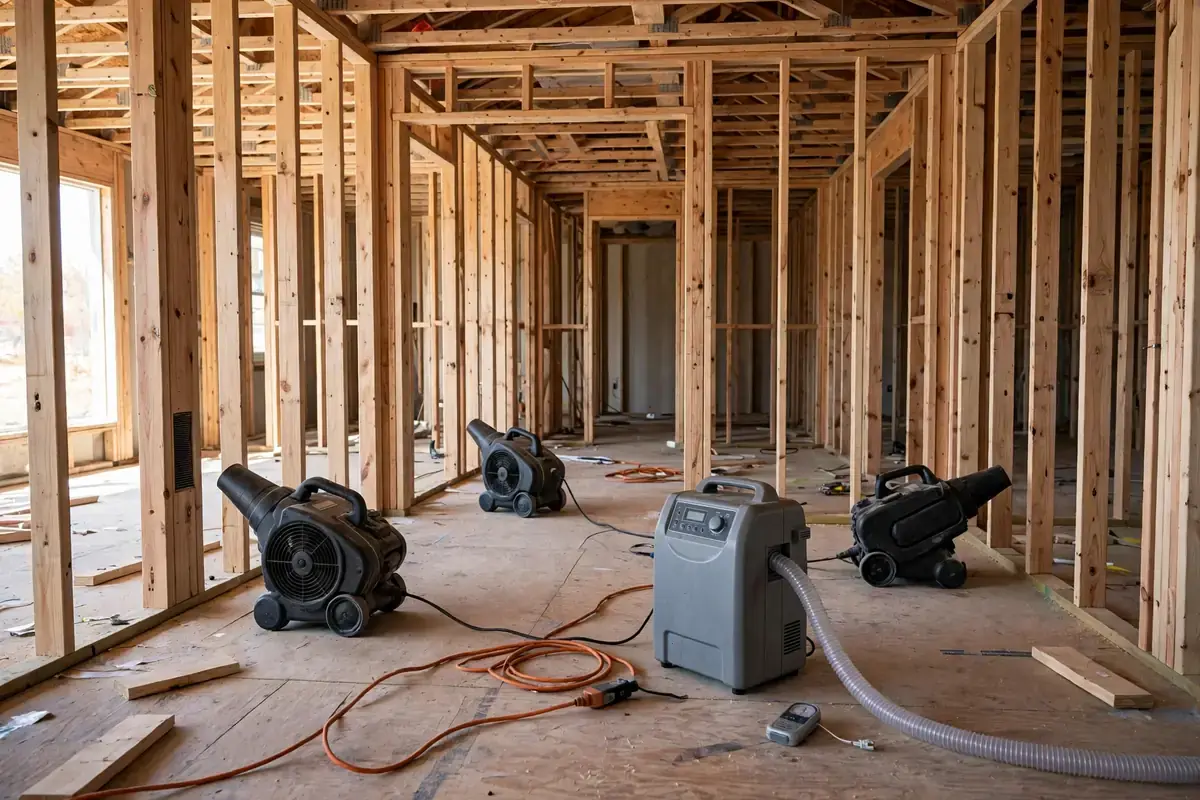
With the water out, we set up the drying system: air movers to push air across wet surfaces and dehumidifiers to pull moisture out of the air. Placement follows the moisture map from Step 1, not guesswork — equipment goes where the readings say the water went. This is the start of structural drying, explained in its own section below.
Step 5 — Monitoring with moisture readings
Drying is checked, not assumed. Our team returns to take moisture readings in the same spots each visit and keeps a dry log — a written record of readings over time. The log shows the home is actually drying, and it is also the record your insurer may ask for. Equipment stays until the readings reach dry standards, not until a set number of days passes.
Step 6 — Cleaning and sanitizing
Once materials are dry or removed, affected areas are cleaned. Where the water category calls for it, surfaces are treated with an antimicrobial so mold and bacteria do not get a foothold in damp dust and residue. Clean water from a supply line needs less of this than gray or black water — the category decides, which is why Step 1 matters.
Step 7 — Repairs
Dry and clean is not always finished. Sheet rock, flooring, baseboards or cabinets that were removed or ruined are repaired or replaced so the room is whole again. The repair scope is written out for you before this step starts, so you know exactly what is being put back. Read more on our reconstruction after water damage page.
Step 8 — Final check
We walk the home with you, take final moisture readings, and confirm every affected material is at a dry standard. You get the dry log and a clear summary of what was done. If a spot is still reading wet, the process is not finished — we say so, and the drying continues.
What do water categories and classes mean?
- Category describes how dirty the water is. Category 1 is clean water from a supply line. Category 2 is used water with dirt or waste in it, like washer or dishwasher drain water. Category 3 is sewage or flood water, and it is never a do-it-yourself job.
- Class describes how much of the room got wet and how hard it will be to dry — from a small corner of one room (Class 1) to ceilings, walls and floors soaked through (Class 4).
- Category and class are decided on site with a meter and a look at the source — not from a photo or a phone call. Our water categories and classes page explains both in full, in plain language.
What is structural drying?
- Structural drying means drying the building itself — the studs, sheet rock, subfloor and framing — not just the surfaces you can touch.
- A floor can feel dry on top while the subfloor and wall cavities behind it are still wet. That hidden moisture is what grows mold and warps framing, so meters, not fingertips, decide when drying is done.
- Air movers, dehumidifiers and, where needed, openings at the base of a wall let wet cavities dry without tearing the whole wall out. Our structural drying page walks through the equipment and the dry log in detail.
How long does the restoration process take?
- Extraction and setup usually happen on the first visit. Drying itself most often runs several days, and repairs add time after the structure is dry.
- What changes the timeline: how long the water sat before you called, the water category, how many materials got wet, and Wichita weather — humid weeks dry slower than dry ones.
- Wet materials should be dried within 24 to 48 hours where possible; if they are not, mold can start growing in that window, per CDC and EPA guidance. That is why the first call matters more than any single step after it. Our drying-time page breaks the ranges down by material.
What can be saved after water damage?
- Carpet can often be dried in place when the water was clean and the call came fast; its padding is cheaper to replace than to dry and is often removed.
- Hardwood can sometimes be dried with floor-mat systems if it has not cupped or buckled yet — timing decides.
- Sheet rock that is still firm may dry; sheet rock that is soft, sagging or sewage-soaked comes out.
- Furniture and belongings depend on what they are made of and what kind of water reached them. Our can carpet, hardwood and sheet rock be saved page goes material by material, and our water-damaged belongings page covers furniture, photos and papers.
What happens after drying is finished?
- Drying ends with readings at a dry standard; repairs begin from the written scope agreed with you.
- Typical repair work after Wichita water damage: replacing removed sheet rock and baseboards, flooring repair or replacement, and repainting dried, repaired walls.
- You approve the repair scope before work starts — nothing is rebuilt on a verbal guess. Our reconstruction after water damage page explains how the repair phase is planned and priced.
Frequently Asked Questions
How long does the whole restoration process take?
Most homes take several days of drying after the first visit, plus repair time once the structure is dry. How long the water sat, its category, and how much material got wet set the real timeline.
Do I have to leave my home during restoration?
Usually not. Most Wichita families stay in the home while equipment runs, though the machines are loud and the wet rooms are out of use until they are dry.
Can I dry my home myself instead?
Small, clean-water spills caught fast can sometimes be handled with towels and fans. Anything that reached walls, flooring layers, or sat for hours needs meters and professional drying, because hidden moisture is the part that causes mold.
Who decides when my home is dry enough?
Moisture readings do. Our team logs readings each visit, and drying ends when materials reach dry standards — not when a set number of days has passed.
Does insurance pay for the restoration process?
Many homeowners policies cover sudden water damage like a burst pipe, while flood water from outside usually needs a separate flood policy. Our Kansas insurance guide explains the difference, and your own policy wording decides.
What should I do before your team arrives?
Stop the water if you can do it safely, keep clear of electricity near water, take photos, and move dry belongings out of the wet area. Our first 60 minutes page lists the safe first steps in order.
Sources
Sources: Category and class wording follows plain-language summaries of ANSI/IICRC S500 (the full standard text was not obtained — see our Sources and Methodology page). Mold timing: CDC and EPA guidance on drying wet materials within 24–48 hours.
Service area: ICT Water Pros serves the Wichita metro across 27 ZIP codes: 67202–67220, 67223, 67226, 67227, 67228, 67230, 67232, 67235, 67260. Location line: Downtown Wichita Area · Wichita, KS 67202. No street address is claimed.
Last reviewed: 2026-11-07
Related pages: Emergency Water Extraction · First 60 Minutes After Water Damage · Water Damage Cost in Wichita · Kansas Water Damage Insurance Guide · Structural Drying · How ICT Water Pros Works
ICT Water Pros — Wichita, KS — Call (316) 205-2900 — Open 24/7